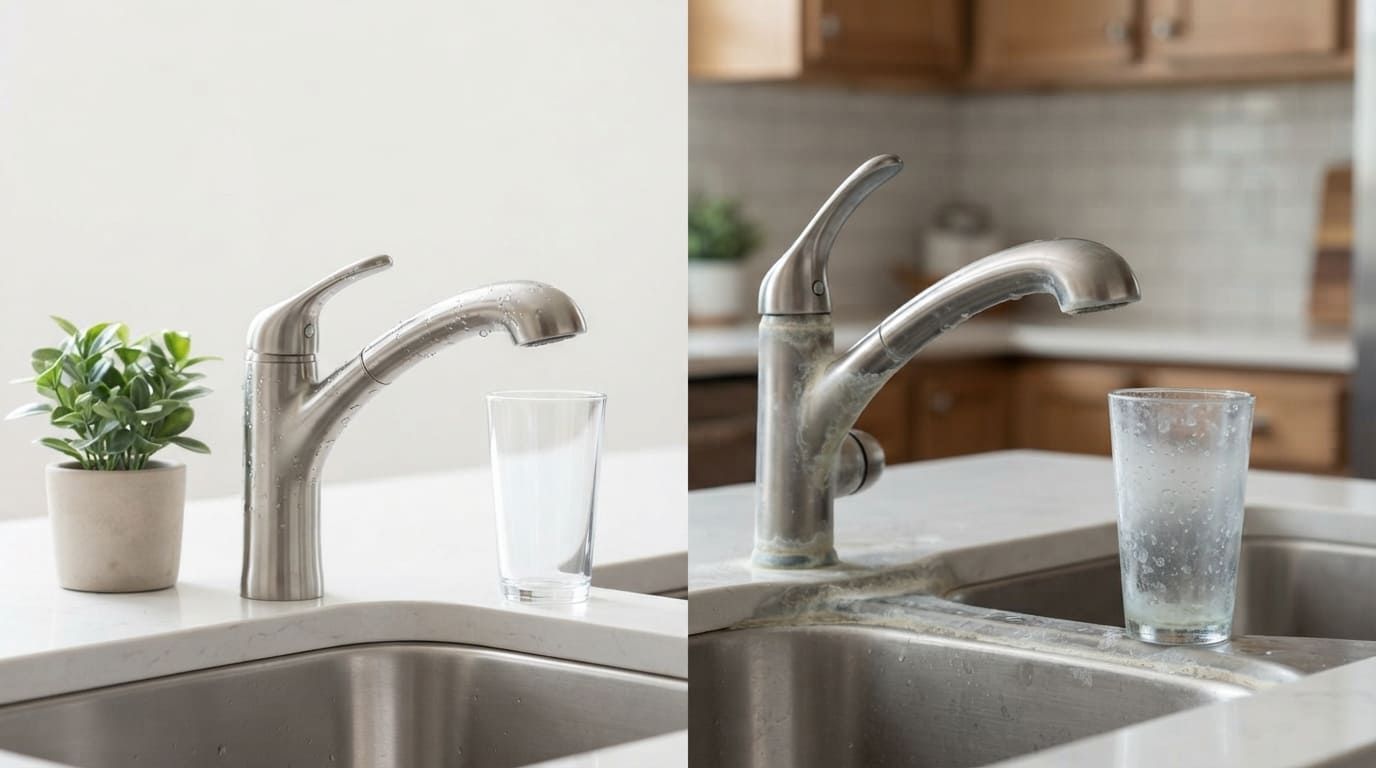
Why Does Your Waukegan Home Have Water Spots and Soap Scum?
You clean the bathroom, wipe down the faucets, and load freshly washed glasses into the cabinet. A short time later, the cloudy spots and chalky residue are back. If this sounds familiar, the problem may not be your cleaning routine. It could be hard water.
Hard water contains dissolved minerals, mainly calcium and magnesium. These minerals are naturally present in many water supplies. They are generally not a health concern, but they can create frustrating problems throughout your home. For Waukegan homeowners, understanding how hard water behaves is the first step toward finding the right solution.
What Causes Hard Water Spots?
Water spots form when droplets dry on a surface and leave dissolved minerals behind. You will often notice them on drinking glasses, shower doors, faucets, sinks, dishes, and stainless steel appliances.
Cleaning removes the visible residue, but it does not remove the minerals from the water. That is why the spots keep returning. As long as untreated hard water continues flowing through the home, new mineral deposits can form every time water evaporates.
A water softener addresses the source of the problem by removing hardness minerals before they reach your fixtures and appliances.
Why Soap Scum Develops So Quickly
Soap does not work as efficiently in hard water. Instead of rinsing away easily, it reacts with calcium and magnesium to form a sticky film. This residue can collect on bathtubs, shower walls, tile, sinks, and glass doors.
The same reaction can affect personal care. Shampoo may be more difficult to rinse from your hair, and soap can leave your skin feeling dry or coated. Many homeowners respond by using more soap, shampoo, and cleaning products, but that does not correct the underlying water problem.
With softened water, soaps and detergents can lather and rinse more effectively. This may help reduce product use while making showers, laundry, dishwashing, and household cleaning easier.
Hard Water Problems You May Not See
Visible spots and residue are annoying, but the hidden effects of hard water can be more serious. Mineral scale may gradually collect inside plumbing lines, water heaters, dishwashers, washing machines, and other equipment that uses water.
Over time, mineral buildup can:
- Restrict water flow through fixtures and pipes
- Reduce the efficiency of a water heater
- Collect around heating elements
- Clog faucet aerators and showerheads
- Make appliances work harder
- Contribute to more frequent maintenance
- Shorten the useful life of plumbing components
You may not notice the buildup immediately. In many homes, the first warning is declining water pressure, inconsistent appliance performance, or an increase in the amount of detergent needed to get acceptable results.
How a Water Softener Works
A traditional water softener uses a process called ion exchange. Inside the system is a tank containing resin that attracts calcium and magnesium. As hard water passes through the tank, the hardness minerals are captured and replaced with a small amount of sodium or potassium.
The treated water then travels through the home. Because most of the hardness minerals have been removed, the water is less likely to create scale and interfere with soap.
The system periodically cleans and recharges the resin through a regeneration cycle. Modern units can be programmed according to the household’s water hardness and usage, helping conserve salt and water when properly sized.
Benefits of Softened Water at Home
The effects of softened water can be noticed in several parts of your daily routine. Benefits may include:
- Fewer mineral spots on dishes and glassware
- Less scale around faucets and showerheads
- Reduced soap scum in tubs and showers
- Softer feeling laundry
- Better lather from soaps and shampoos
- Easier bathroom and kitchen cleaning
- Better protection for water using appliances
- Less mineral accumulation inside plumbing fixtures
A water softener is not simply about how the water feels. It can also help protect the systems and appliances you depend on every day.
Do You Need a Water Filter Too?
A water softener and a water filter are not the same thing. A softener targets calcium and magnesium, while filtration equipment is designed to address other water quality concerns.
Depending on the water and the homeowner’s goals, a filtration system may help reduce:
- Chlorine taste or odor
- Sediment
- Certain unwanted tastes
- Specific contaminants
- Iron or sulfur issues in applicable water supplies
Some households need only a water softener. Others may benefit from a whole house water filter and softener combination. Water testing can help determine which equipment is appropriate instead of relying on assumptions.
Choosing the Right System for Your Waukegan Home
Water treatment equipment should be selected for the home where it will be installed. A unit that works well for one household may be inefficient or undersized for another.
Important sizing factors include:
- The hardness level of the water
- The number of people living in the home
- Typical daily water consumption
- The home’s plumbing flow rate
- The number of bathrooms
- Additional water quality concerns
- Available space for installation
An undersized softener may regenerate too often or fail to provide consistent soft water during periods of heavy use. A poorly configured system may waste salt and water. Professional testing and sizing help the system work more efficiently and reliably.
Maintaining a Water Softener
Water softeners do not require constant attention, but they should not be completely ignored. Homeowners need to check the brine tank and add the correct type of salt when needed. It is also helpful to inspect the tank occasionally for salt bridging, which occurs when hardened salt creates an empty space beneath it.
Periodic maintenance can confirm that the controls, valves, and regeneration settings are working correctly. If the water begins to feel hard again or mineral spots suddenly return, the system may need salt, an adjustment, cleaning, or professional service.
Start With a Professional Water Test
Water can look perfectly clear and still contain enough minerals to create scale. A professional water test measures hardness and helps identify other conditions that may affect treatment recommendations.
Testing removes the guesswork. It allows the system to be selected and programmed according to your water, household size, and expected usage.
Improve the Water Throughout Your Home
If you are tired of scrubbing mineral deposits, rewashing spotted glasses, or dealing with soap that never seems to rinse cleanly, it may be time to look more closely at your water.
Waukegan Water Softener provides water softener and filtration solutions for homeowners in Waukegan, Illinois. We can help evaluate your water, explain the available treatment options, and recommend a properly sized system for your household.
Contact Waukegan Water Softener to schedule a water quality evaluation and take the first step toward cleaner fixtures, more efficient appliances, and better water throughout your home.